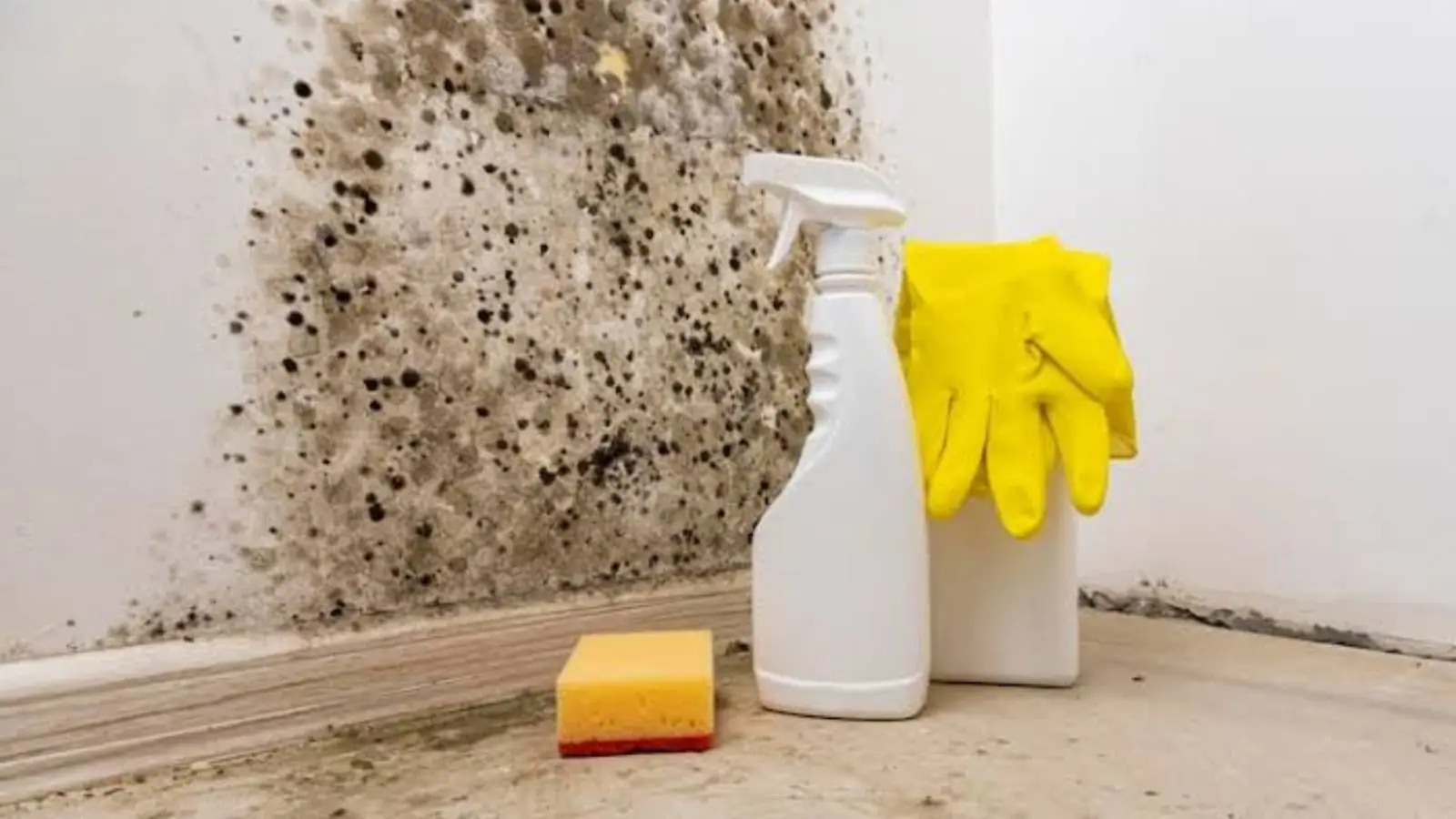
Search results promise a spray that ends mold in one pass. Store shelves back it up with bottles, bombs and coatings, all with confident labels. The trouble is that mold is a moisture problem first, and a product cannot fix a wet wall.
Below, each popular fix gets a plain look at what it does and where it stops. The pattern is the same every time: remove the water, then physically remove or clean the growth.
Why no single product ends a mold problem
Mold spores are in ordinary indoor air. They grow when they land on a damp, organic surface such as drywall paper, wood, carpet pad or ceiling tile. Take away the water and growth stops, and leave it in place and growth returns.
Even when a product kills the surface growth, dead mold is still on the material. Removal is the point of ANSI/IICRC S520, which describes remediation as controlling moisture and removing or cleaning contaminated material, not just treating it. That is why a spray alone is a weak answer.
A quick example shows the gap. A closet wall stays damp from a pipe behind it, and the owner sprays it every month. The stain fades each time and returns each time, since the pipe is still dripping. One plumber visit and a section of removed drywall ends the cycle, and no spray could do that.
Product by product: what it does and where it stops
The table below sets common methods beside what they actually accomplish. None of them is useless in every case, but none is the instant fix the label suggests.
| Product or method | What it really does | Limit |
|---|---|---|
| Household bleach | Whitens and disinfects hard, nonporous surfaces | EPA does not recommend routine use for mold cleanup. It does not penetrate wood or drywall well and leaves moisture behind |
| White vinegar | Mild acid that can loosen surface growth on hard surfaces | Soaks into porous material, adds water and has no effect on the moisture source |
| Paint-on mold sealers | Cover stained surfaces with a coating | Hide the problem. If the substrate stays wet, the coating can blister and growth continues underneath |
| Fogging or misting treatments | Spread a chemical through the air and onto surfaces | Do not remove growth and do not dry anything. Can leave residue and does not replace cleaning |
| Detergent, water and scrubbing on hard surfaces | Physically lifts growth from tile, glass and sealed surfaces | Works only on nonporous material, and the area must be dried afterward |
Water or mold problem right now?
Call the 24/7 line and describe what you see.
The bleach question
Bleach is the first thing most people reach for. EPA does not recommend routine bleach use for mold cleanup, in part because the water content of the solution can feed growth on porous material and because cleaning, not killing, is the goal. Bleach should also never be mixed with ammonia or vinegar, since those combinations release hazardous fumes.
On a bathroom tile, a detergent and a brush usually does the same job with less risk. On drywall or wood, neither bleach nor anything else in a spray bottle reaches the growth below the surface.
Vinegar, sealers and fogging in plain terms
Vinegar has a loyal following, and on a hard shower surface it can help lift growth when you scrub. It adds water, though, and on drywall that is the wrong direction. The same limit applies to any liquid used on a porous material.
Paint-on sealers and encapsulants have a place after remediation, on cleaned and dried framing, when a crew chooses to use one. Painted over wet or moldy drywall, they only hide the evidence. Fogging works the same way. A fog reaches surfaces without scrubbing them, and it does nothing about the wet stud behind the wall.
- A label that says it kills mold on contact is not a plan if the wall is still wet.
- A stain that comes back through new paint means moisture is still there.
- A company that proposes fogging without removal or drying deserves questions.
- Ask any company whether its crews work to S520 and what they do with the wet material.
What actually works: moisture control plus physical removal
The sequence that works is short. Find and stop the moisture, contain the area, remove porous materials that are moldy, clean the framing and hard surfaces, HEPA vacuum and dry. EPA guidance says drying wet materials within 24 to 48 hours generally prevents mold growth, so early water work matters. If a leak started it, start with water mitigation to remove water and dry the structure.
Hard, nonporous surfaces such as tile, glass and sealed fixtures can be cleaned in place with detergent and water, then dried. Porous items such as drywall, ceiling tile, insulation and carpet pad are usually removed when moldy, because the growth is inside the material. Solid framing sits in between and is typically cleaned by HEPA vacuuming and sanding or brushing under containment.
Black mold is a color, not a diagnosis. Many species look dark, and you cannot tell by sight which one is present. Testing and any health questions belong to qualified professionals and a physician. Our mold remediation crews work on the physical side: containment, removal, cleaning and drying.
No honest company will promise that mold will never return. A dry building is what keeps it away, so keep humidity in check, fix leaks quickly and run bathroom fans.
Black mold questions in Montebello homes
Montebello sits about 8 miles east of downtown Los Angeles, and its 2020 Census count of 20,308 housing units is 55.6 percent renter-occupied. If you rent and see dark growth, photograph it and send a written report to the landlord before scrubbing it away. The photos show what was there and when you reported it.
A spreading dark patch near a wall that carries plumbing may mean a hidden leak. The City of Montebello lists four water providers, and the page does not say which serves which address, so check the water bill, and watch your meter with all fixtures off to see whether it keeps moving.
The same advice holds in Monterey Park, where the city runs its own water utility, and in Rosemead, where six water companies serve the city. For a moldy area larger than about 10 square feet, EPA guidance points to professional help.
Common questions
Does bleach kill black mold?
Bleach can whiten and disinfect hard surfaces, but EPA does not recommend routine bleach use for mold cleanup. It does not reach growth inside porous material, and the real fix is removing moisture and the contaminated material.
Will vinegar get rid of mold on drywall?
Not reliably. Vinegar adds water to porous drywall and does nothing about the source. Moldy drywall is usually cut out and replaced after the leak is fixed.
Can I paint over mold with a sealer?
Sealers hide staining but do not remove growth or dry the wall. Used after proper cleaning of dry framing they can have a role, and painting over wet or moldy material is a short-lived cover.
How do I know if I have black mold in my Montebello home?
You cannot tell the species by color. Look for staining, musty smell and moisture sources, photograph what you find and call for an assessment. Testing and health questions go to qualified professionals and a physician.