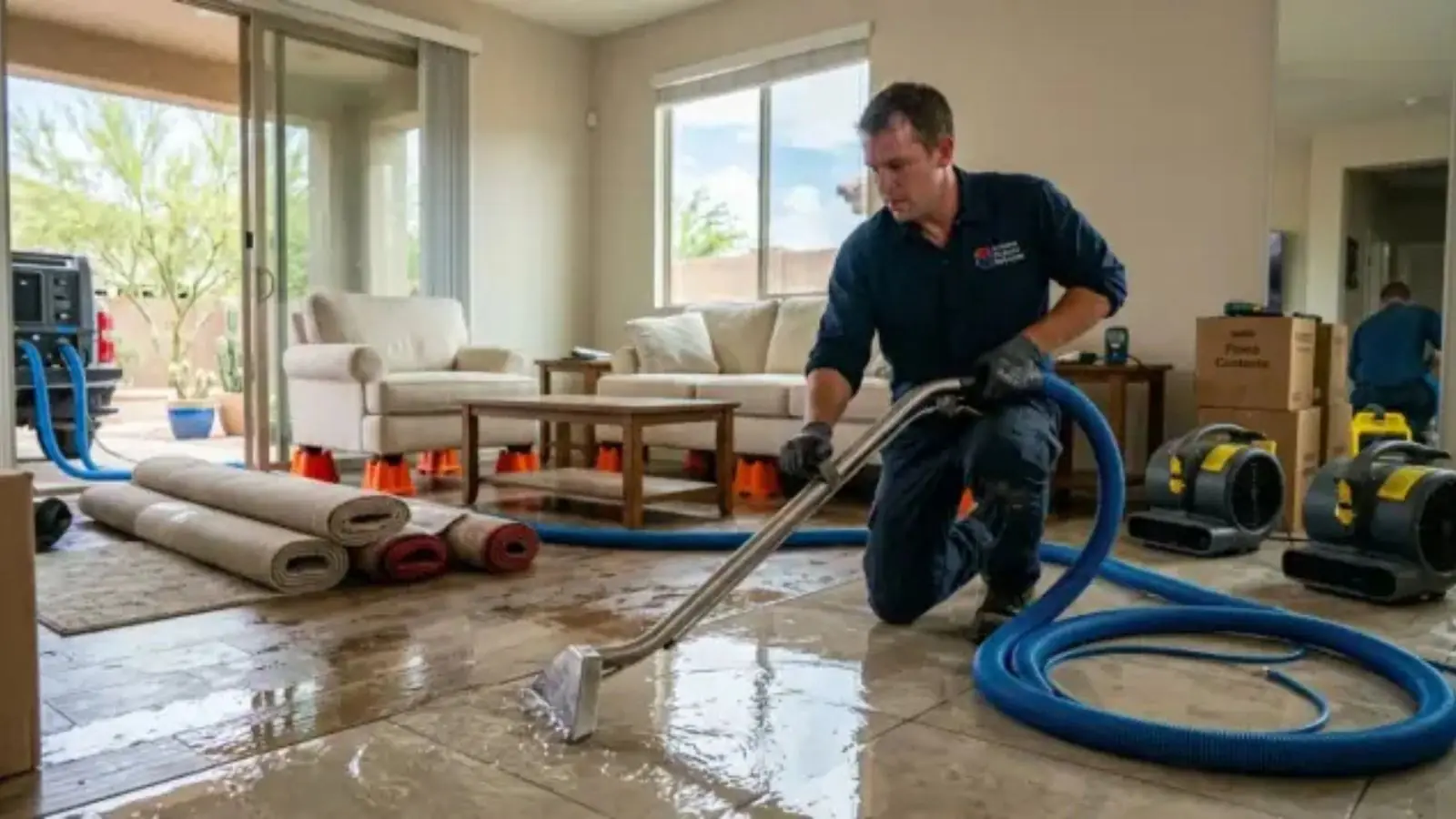
How water is actually removed
Water removal sounds simple, and shop vacuums can handle a spill, but a real loss needs more power. Submersible pumps move deep water. Truck-mounted or portable extraction units pull water out of carpet, pad and hard surfaces. A floor that looks dry on top can still hold a lot of water underneath.
A crew works from the deepest water outward, then makes a second pass over carpet and wood with weighted extraction tools. The aim is to take out as much liquid as possible before drying equipment goes in, because every pint extracted is a pint the dehumidifiers do not have to handle.
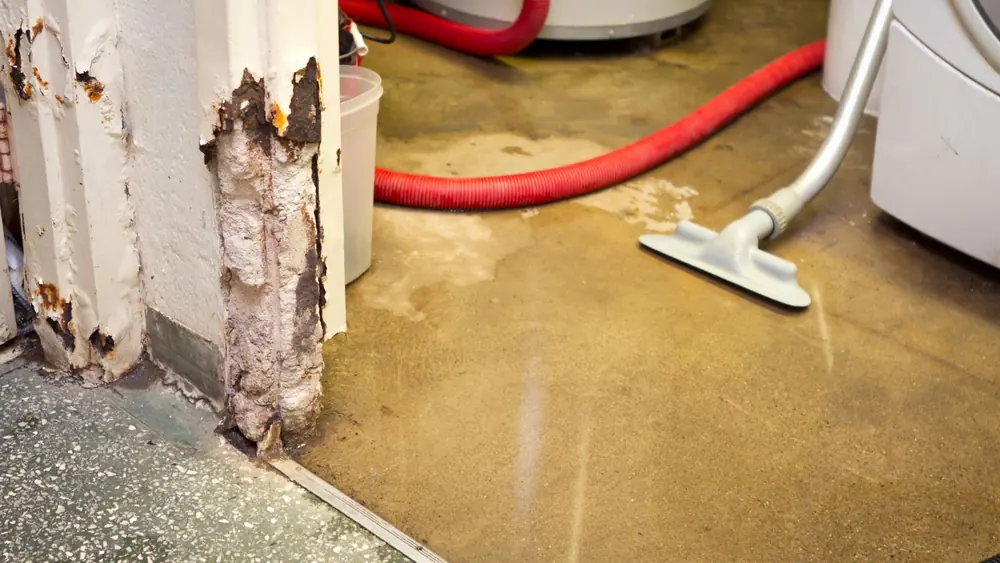
Burst pipe water damage: what to do first
A burst supply line, a failed water heater or a split washing machine hose can release gallons per minute. The first step is to close the main water valve. Know where it is before you need it, and look for a second shut-off at each fixture.
Once the water is stopped, lift valuables, open cabinet doors under sinks and leave the rest to the crew. Do not run a household vacuum on wet floors. If the leak is in a ceiling, avoid standing under a sagging area, because wet drywall holds more weight than it looks like.
A burst line often wets more than one room. Water follows the floor slope and the gaps around plumbing, so a crew checks the room below and the walls next to the source. After extraction, the next stage is water mitigation, which dries what the pumps could not reach.
When standing water is an emergency
Call right away if the water is deeper than an inch, if it reaches electrical outlets or the panel, if it smells like sewage or if it is spreading to other rooms. Those conditions are either getting worse quickly or unsafe to enter.
For any electrical or gas risk, call the utility or 911 first. Cut power only if the panel is dry and you can reach it without stepping in water. Water from toilets, drains or outside flooding is treated as contaminated, so keep people and pets out and wait for the crew.
Removal job types and what each needs
| Situation | Equipment | Safety note |
|---|---|---|
| Supply line or hose leak | Extraction unit, then drying equipment | Water is usually clean at first but turns worse as it sits |
| Water heater failure | Pumps for depth, extraction for carpet | Hot water, so wait for the crew if the tank is still leaking |
| Roof or storm intrusion | Extraction, wet-material removal | Check for sagging ceilings before entering |
| Sewer or drain backup | Pumps and sanitizing steps | Treated as contaminated, so leave it to the crew |
Backups and flooding are covered in more detail on the flood damage restoration page, since they carry stricter handling rules.
What removal costs and what insurance may cover
Price depends on the depth and area of the water, the water category, the materials soaked and how long the equipment runs. Scope and price are explained before work starts, and you can ask for a written scope you can show your insurer.
Sudden and accidental water damage is often covered, gradual leaks often are not, and flood damage usually needs separate coverage. Check your policy and ask your insurer. Want your real number? Call the 24/7 line and describe how much water is on the floor.
Standing water right now?
The dispatch line is open 24 hours a day.
Water removal in Montebello: know your shut-offs and your provider
Four different water providers serve Montebello, according to the city website. Check your bill so you can call the right one if the leak is on the service line before your meter. The same advice applies just north in Rosemead, where six water companies serve the city.
If you live near the Rio Hondo along the city's east side, check the FEMA Flood Map Service Center for your address. Surface flooding follows different insurance rules than a burst pipe, and knowing which you have changes who you call and what you document.
Water removal questions
How fast can standing water be removed?
That depends on depth, area and access. A crew starts with the deepest water and works outward. What matters is that extraction starts as soon as possible, because water keeps moving into materials while it sits.
Is it safe to remove water myself with a wet vacuum?
For a small spill on a hard floor, yes. For anything that reaches outlets, spreads across rooms or came from a sewer line, no. Electrical risk and contaminated water are the two reasons to leave it to a crew.
What happens after the water is out?
The structure still holds moisture, so drying equipment goes in and readings are recorded until it is dry. After that comes water damage cleanup for debris and sanitizing, then repair.
Do you handle emergency water removal at night or on weekends in Montebello?
Yes, dispatch does not close. Night calls get the same pumps and extraction units as daytime calls, and weekends and holidays are covered. Close the main valve and keep clear of water near outlets until the crew is there.