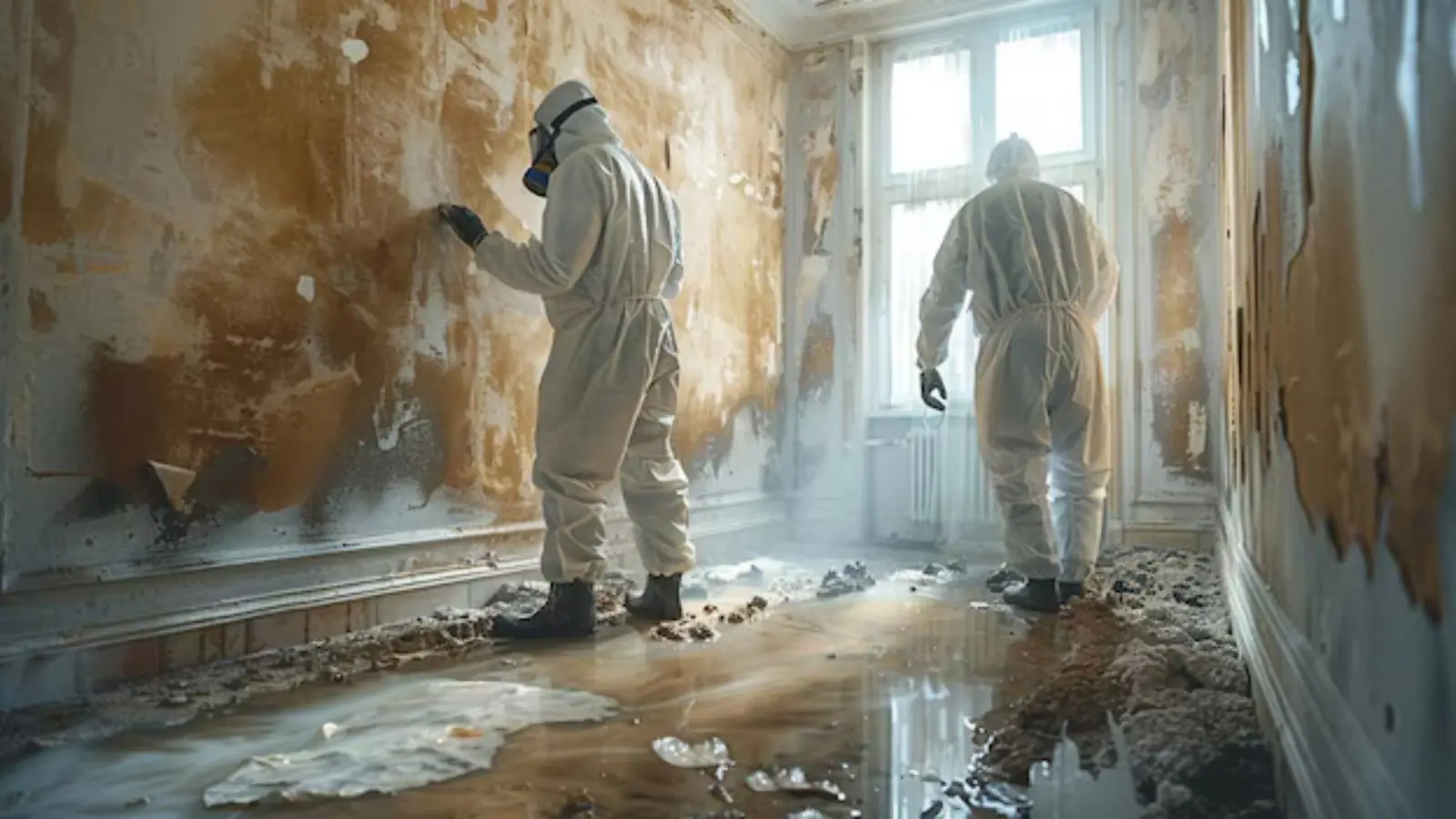
Dark spots on the ceiling or wall: is it mold?
Most people do not search for remediation. They search for black spots on a wall, a musty smell in a closet or a ceiling that has changed color. Those are the symptoms. Mold is one possible cause, and color alone cannot tell you the type or whether it is active.
What can be said is that mold needs moisture, so the useful question is where the moisture is coming from. A bathroom without ventilation, a roof leak, a supply line that dripped for months and a drained but never-dried flood are the usual answers. The fix starts there.
How mold remediation works
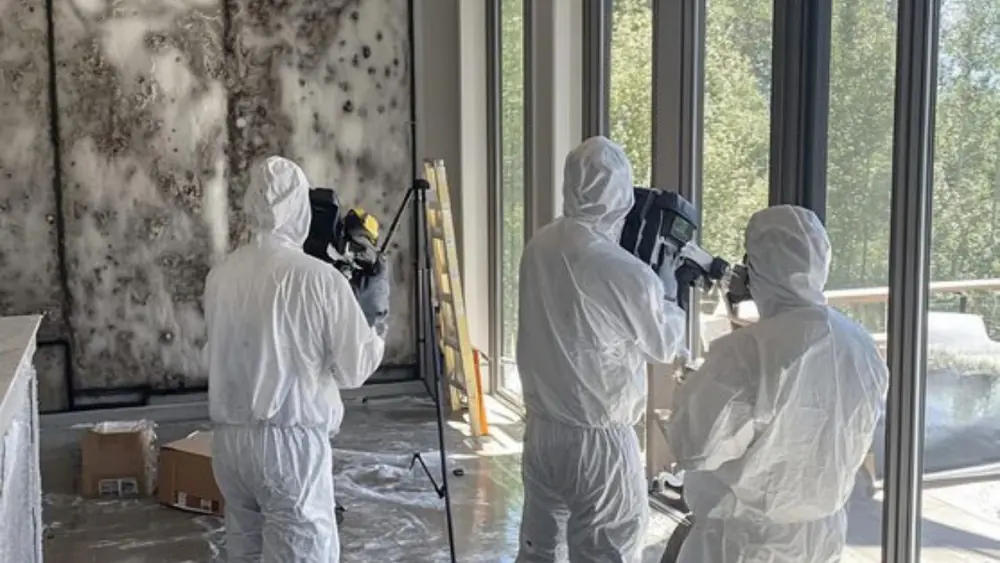
Remediation follows ANSI/IICRC S520, the published standard for mold remediation. A crew confirms the extent of the growth, sets up containment so spores do not spread, and runs air filtration with HEPA filters. Growth on porous materials like drywall and insulation is removed and bagged. Surfaces that can be cleaned are cleaned and vacuumed with HEPA equipment.
The moisture source is fixed and the area is dried before rebuilding. Ask any company whether its crews work to S520, and ask what the verification step is at the end. Testing and health questions belong with a qualified specialist and a physician, not with a sales call.
- Find and fix the moisture source first
- Contain the area and filter the air
- Remove growth from porous materials
- Clean salvageable surfaces with HEPA equipment
- Dry the area and confirm readings
- Rebuild only after verification
Mold removal and black mold cleanup
Black mold is a popular term for dark growth, but color does not identify the type. The same steps apply to any visible growth: contain, remove, clean and fix the moisture. Painting over it or spraying a product on it does not remove it, and EPA does not recommend routine bleach use for mold cleanup.
EPA guidance suggests getting professional help when the moldy area is larger than about 10 square feet, roughly 3 feet by 3 feet. Smaller patches on hard surfaces can be handled carefully by a homeowner who wears protection, but the moisture source still has to be solved.
Mold after water damage
Mold after a leak or flood is common when materials stayed wet. EPA guidance says drying wet materials within 24 to 48 hours generally prevents mold growth. After that window, hidden growth in wall cavities and under carpet becomes more likely.
If you recently had a loss and now smell mustiness, check how it was dried. Water mitigation with recorded readings is the best defense, and water damage cleanup removes the wettest materials early. No one can promise that mold will not come back, so moisture control after the job matters.
Water still present?
Call the 24/7 line. Fixing the moisture comes first.
Cost factors and insurance
Price depends on how large the area is, which materials are involved, how much containment is needed and how much rebuilding follows. We explain scope and price before work starts.
Insurance often covers mold only when it results from a covered sudden loss, and gradual leaks and neglect often are not covered. Check your policy and ask your insurer. Ask whether California licenses mold work, and confirm the answer with any company you consider.
Mold in Montebello: moisture sources to check
Montebello has 20,308 housing units, and 55.6 percent are rented, according to the 2020 Census. In a rental, report mold in writing with photos, and note when you first saw it. The landlord needs a record to act, and you need one to show the timeline.
Common hidden moisture sources are bathroom ceilings under a roof leak, closets along exterior walls and spaces under kitchen sinks. The steps are the same just north in Monterey Park, and the same crews serve both cities.
Mold remediation questions
Can mold be removed with bleach?
EPA does not recommend routine use of bleach for mold cleanup. Bleach may lighten the color but does not solve the moisture problem or remove growth from porous materials.
How do I know when mold needs a professional?
EPA guidance points to professional help for areas larger than about 10 square feet, for growth after sewage or flood water, and when moisture keeps returning. Health questions belong with a physician.
Should I test for mold first?
Testing can answer certain questions, but it does not replace fixing moisture and removing growth. Ask what the test would change about the plan before paying for one.
Do you take mold remediation calls at night or on weekends in Montebello?
Mold on its own rarely needs a midnight visit, but the water that feeds it might. The line is open at all hours, and a crew can be sent the same day when available.