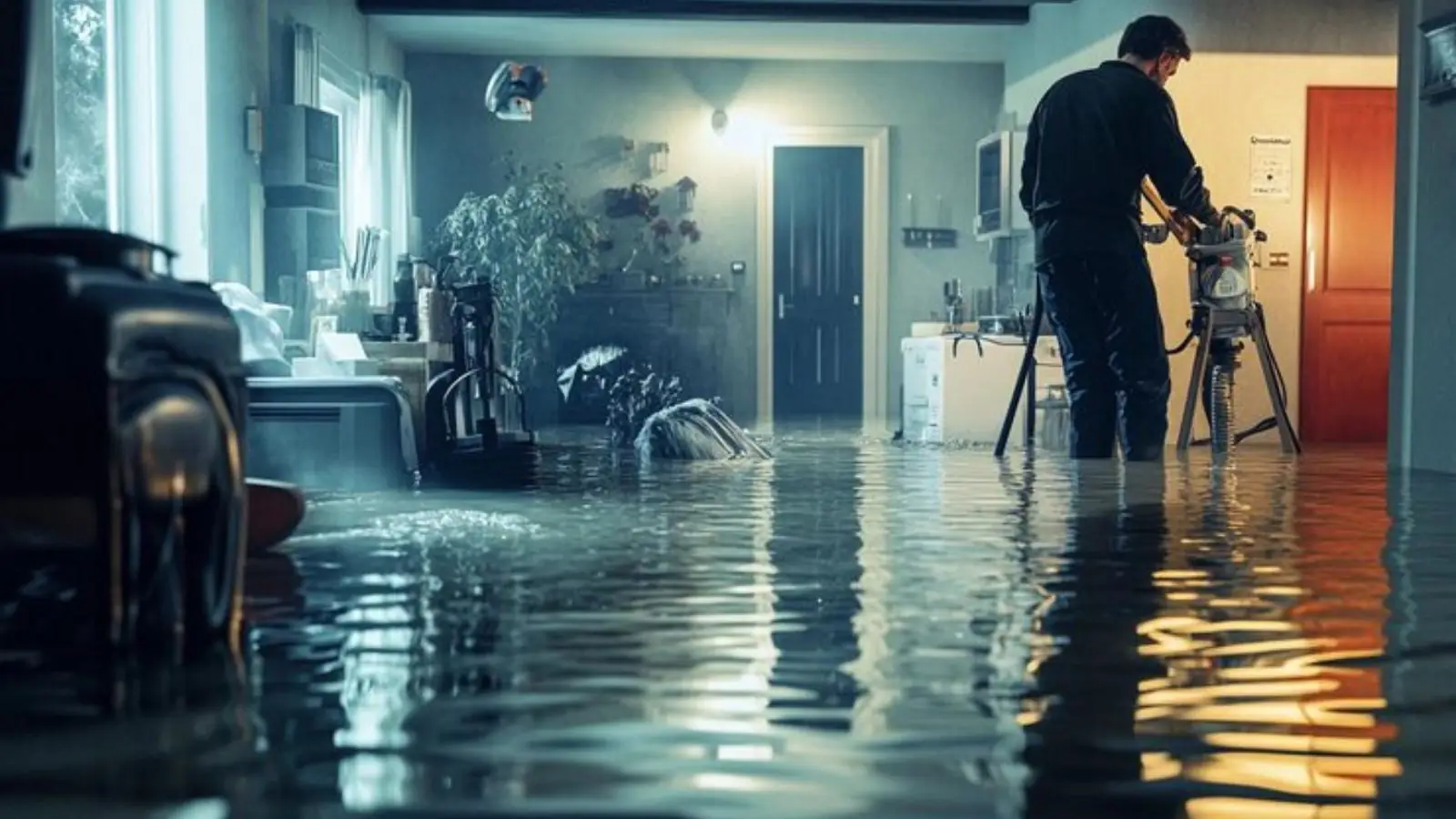
My wall is wet and I do not know what to call it
Most people never search for the word mitigation. They search for wet drywall, water coming through the ceiling or a soaked floor, and they want to know what to do first. Mitigation is the answer to that question. It is the short, urgent phase that keeps a small loss from becoming a large one.
Think of it as the difference between stopping a leak and repairing the room. Mitigation handles the first. Water damage repair handles the second, and it only starts once the structure is dry.
What mitigation involves, step by step
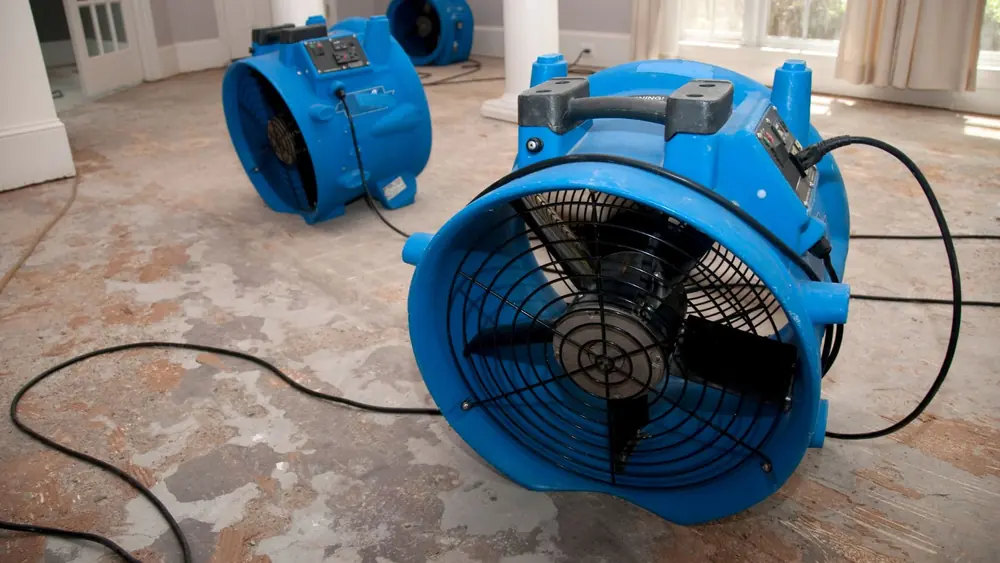
A crew arrives with moisture meters, a thermal imaging camera, extraction units, air movers and dehumidifiers. The first job is to find where the water has traveled, because it rarely stays where it landed. Moisture mapping records readings across walls, floors and ceilings so the crew knows what is wet before any equipment is placed.
Standing water comes out with pumps or extraction units. Wet materials that cannot be saved, usually carpet pad and soaked insulation, are removed so they stop holding water against framing. Then air movers and dehumidifiers go in, and the crew returns to check readings until they reach the dry goal.
- Source of water identified and stopped
- Moisture mapped with meters and thermal imaging
- Standing water extracted
- Unsalvageable wet materials removed
- Air movers and dehumidifiers placed and monitored
- Daily or near-daily readings recorded until dry
Structural drying: how walls, floors and ceilings are dried
Structural drying is the part of mitigation that pulls moisture out of materials that were never meant to get wet. Air movers push dry air across surfaces while dehumidifiers remove the moisture from the air, so the wet material keeps releasing water into a dry room.
Wall cavities are often dried through small openings or by removing baseboards, so the whole wall does not have to come down. Hardwood floors may be dried with mats that pull moisture through the boards. Concrete slabs dry slowly, and a crew keeps checking them because a slab that feels dry can still be holding water.
The crew records readings at the same spots each visit. When they stop dropping and match a dry reference reading, the equipment comes out. That record is also the document an insurer is most likely to ask for.
When standing water is an emergency
Treat it as an emergency when water is still arriving, when it covers more than one room, when it has touched electrical outlets or when it came from a sewer line or outside flooding. Those situations get worse by the hour, and some are unsafe to enter.
If water is near outlets, an appliance or the panel, stay out. Cut power only if the panel is dry and you can reach it safely, and call the utility or 911 for any electrical or gas risk before you call us. Sewage and flood water are contaminated, so do not wade through them. Details for those jobs are on the flood damage restoration page.
The first 72 hours, in order
The timing below is a general guide. Every loss is different, and a crew sets the schedule from moisture readings.
| When | What is happening | Why it matters |
|---|---|---|
| First hour | Source stopped, power risks checked, valuables lifted | Less water reaches drywall and flooring |
| First 24 hours | Extraction, removal of wet pad and insulation, equipment placed | Wet materials stop feeding moisture into framing |
| 24 to 72 hours | Drying with readings recorded, equipment adjusted | EPA guidance says drying wet materials within 24 to 48 hours generally prevents mold growth |
| After 72 hours | Final readings, equipment removed, rebuild scope written | Repairs start only on dry structure |
What decides the cost of mitigation
Four things move the number most: the water category under ANSI/IICRC S500, the wet area, the materials involved and the number of drying days. A burst supply line in one room can be a short job. A slow leak that soaked a wall cavity for weeks takes longer, and it often arrives with mold concerns that belong with mold remediation.
Insurance treats sudden and accidental water damage differently from gradual leaks and neglect, and flood damage usually needs separate coverage. Check your policy and ask your insurer. Want your real number? Call the 24/7 line and describe what is wet.
Water still spreading?
Call now. Scope and price are explained before work starts.
Mitigation in Montebello: what to check before water arrives
More than half of Montebello housing units are renter-occupied, 55.6 percent in the 2020 Census. If you rent, photograph the damage, tell your landlord in writing and call mitigation right away, because drying cannot wait for a repair contractor to be chosen.
The City of Montebello lists four water providers for residents and businesses. Look at your bill to see which one serves you, because a leak before the meter is often the utility's responsibility while a leak after it is yours. Knowing that before an emergency saves a phone call when the water is already running. Crews also take calls from nearby Monterey Park when the same storm or outage hits more than one city.
Water mitigation questions
What is the difference between water mitigation and water damage restoration?
Mitigation is the first phase. It stops the source, removes standing water and dries the structure. Restoration is the full process, which also includes cleanup and repair. Our emergency water removal crews often begin the extraction step of a mitigation job.
How long does structural drying usually take?
Many jobs need several days, but the number depends on the materials, the water category and the equipment. Crews stop only when moisture readings match a dry reference reading, not when a room feels dry.
Will mitigation stop mold?
Drying within 24 to 48 hours generally prevents mold growth according to EPA guidance, but nothing can promise that mold will not appear. If growth is already visible, the mold needs separate attention.
Do you handle water mitigation emergencies at night or on weekends in Montebello?
Yes. Crews answer calls around the clock, nights and weekends included. Call, describe what is wet and close the main water valve. Same-day response is offered when a crew is available.