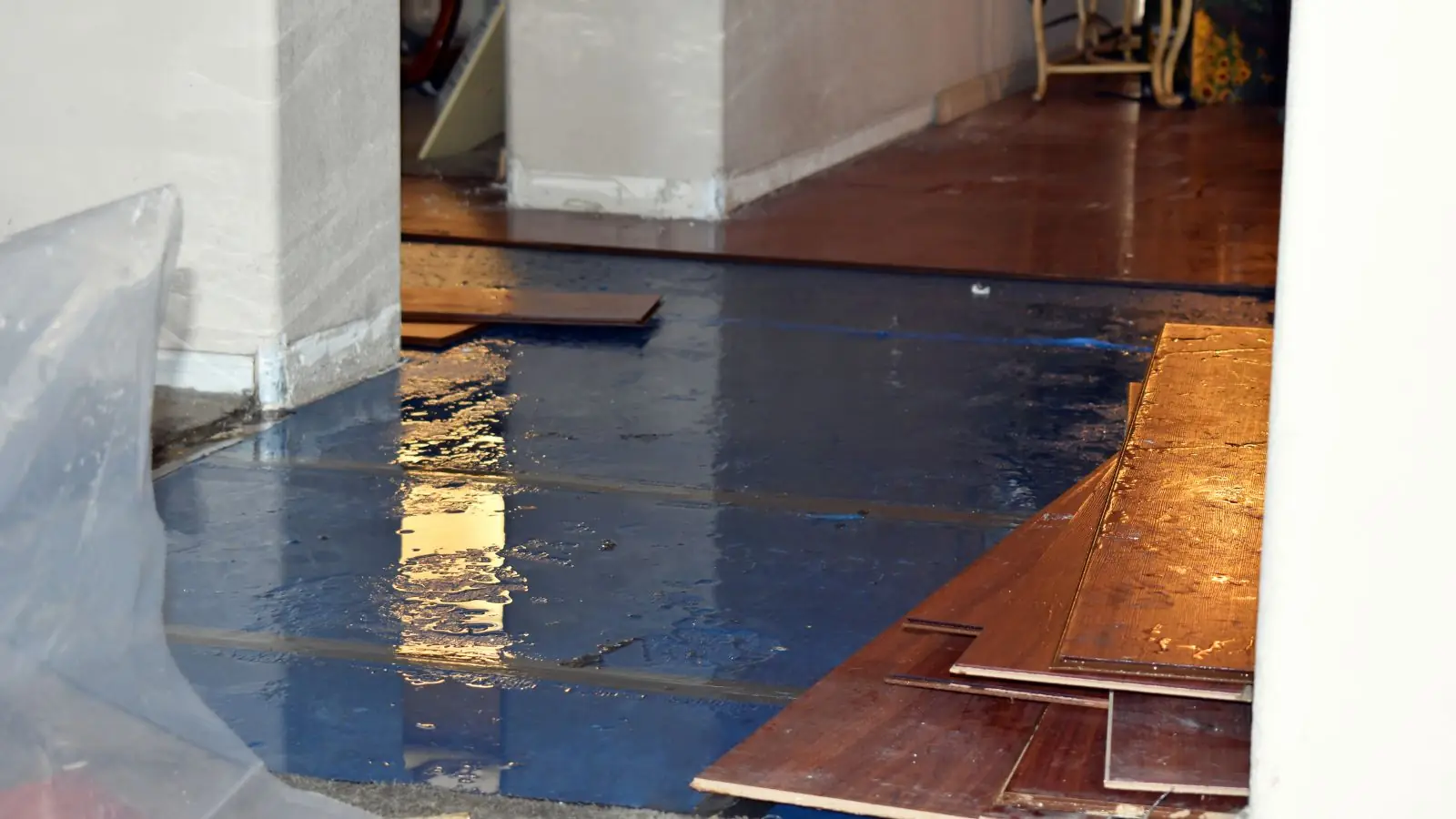
Wood is a sponge with a memory. Boards swell when they take on water, and they shrink back as they dry, but not always evenly or all the way. What you see a week after the leak is often different from what you see on day one, which is why the first decisions are about drying, not about sanding.
This guide defines the three main distortions, explains how floors are actually dried, and lays out when refinishing is realistic and when replacement is the honest answer. It also covers the difference between a slab floor and a raised floor in plain terms.
Cupping, crowning and buckling
Cupping happens when board edges rise higher than the center, so each plank forms a shallow dish. It usually means moisture came from below or the underside is wetter than the top. Crowning is the reverse, with the center higher than the edges, and it often shows up after a cupped floor is sanded while still damp, or when the top surface took the water.
Buckling is the severe one. Boards lift off the subfloor, sometimes by inches, and may separate in a ridge across the room. It means the wood expanded until the nailing or glue failed, and it calls for professional assessment before anyone walks on the area.
| Floor symptom | What it usually means | Typical option |
|---|---|---|
| Cupping, edges raised | Moisture from below or a damp underside, board expanded across its width | Dry fully, wait for readings to settle, then sand and refinish if flat |
| Crowning, center raised | Top surface wetter than the bottom, or a cupped floor sanded too early | Allow time to equalize, then sand flat if enough wear layer remains |
| Buckling, boards lifting | Board expansion beat the fasteners, possible subfloor saturation | Remove affected boards, dry the subfloor, replace the section |
| Black or dark staining along seams | Long wetting, possible growth below the finish | Lift sample boards, assess for mold, usually replace stained areas |
| Gaps opening after drying | Boards shrank back, sometimes with permanent set | Wait for stability, then fill, sand or replace by judgement |
How wet floors are dried
Drying starts with extraction and then controlled air movement and dehumidification. For hardwood, technicians may use drying mats or panels that pull moisture through the board surface with suction or airflow, plus air movers and a desiccant or refrigerant dehumidifier. The aim is steady, not violent, drying, because forced heat can split the boards or make cupping worse.
Moisture readings guide every step. A meter reads the wood, another reading is taken on the subfloor, and both are compared with an unaffected room using the same species and thickness. The floor is ready when readings match that dry reference and stop changing, which can take days or longer for thick planks. ANSI/IICRC S500 covers drying and documentation, and you can ask any company whether its crews work to it.
- Take photos of the floor before anything is moved, then the moisture readings each day.
- Ask for readings on the wood and on the subfloor, not only on the surface.
- Keep rugs, furniture legs and wet cardboard off the floor while it dries.
- Avoid space heaters and floor fans aimed down without guidance, which can cause uneven drying.
- Do not sand or refinish until the readings match the dry reference.
Water or mold problem right now?
Call the 24/7 line and describe what you see.
When sanding and refinishing works
Refinishing works when the floor has dried, the boards have flattened or can be flattened by sanding, the nails still hold, and the wood has enough thickness above the tongue to survive another sanding. Solid hardwood often tolerates multiple sandings, while engineered floors have a thin top layer and may allow one light pass or none. A flooring professional can check the wear layer by looking at an exposed edge.
Replacement is the realistic answer when boards are buckled, the finish has delaminated, the subfloor is rotted, growth has spread under the planks, or contaminated water has soaked in. Category 3 water, the black category in S500, calls for removal of porous flooring that was soaked. Repairs of this kind fall under water damage repair, and the earlier drying work is water mitigation.
Slab versus raised floor, in plain terms
A slab floor sits on a concrete pad poured at ground level, so water can wick up from the soil or pass through cracks. A raised floor sits over joists above a crawl space, so water can arrive from a leak on top or from damp air and soil below. To find out which you have, look for a crawl space vent or access panel outside.
It matters because the drying plan differs. On a slab, moisture in the concrete needs checking before new wood goes down. On a raised floor, the crew inspects the underside for wet insulation, standing water and growth. If you see sewage, standing water near outlets, or a sagging ceiling below, stay clear, cut power only if the panel is dry and reachable, and call the utility or 911 for electrical or gas hazards.
Montebello hardwood floors and who handles which leak
Montebello is about 8 miles east of downtown Los Angeles, and the 2020 Census counted 20,308 housing units here. Because 55.6 percent are renter-occupied, many floor decisions involve a landlord. Send photos and moisture logs in writing before anyone lifts boards, and ask who approves a replacement.
The City of Montebello website lists four water providers and does not say which serves which address, so check your bill if a floor soaked after a main line or meter leak. The provider can look at the supply side while a drying crew handles the floor. The dispatch team can also talk through homes in Rosemead and Monterey Park.
Common questions
Will a cupped floor flatten on its own?
Sometimes it relaxes once the wood returns to the same moisture level as an unaffected area. That can take days or weeks, so wait for readings to settle before deciding on sanding. Cupping that stays after drying may still be sanded flat.
Can engineered hardwood be refinished after water damage?
Only if the top layer is thick enough and the floor has not delaminated. Many engineered floors allow one light sanding or none. Water can also swell the core and loosen the layers, in which case replacement is the safer option.
How soon should I call after a floor gets wet?
As soon as the water source is stopped. EPA guidance says drying wet materials within 24 to 48 hours generally prevents mold growth, and wood that sits wet longer is more likely to buckle or stain.
Who decides whether my Montebello hardwood floor is saved?
The moisture readings and the condition of the boards decide it, and your insurer decides what your policy pays. Call the 24/7 dispatch line so a crew can start drying and log readings while you talk to your insurer.