Two homeowners with the same size kitchen can get quotes that look nothing alike, and both quotes can be honest. The difference usually sits in the scope of work, not in a hidden markup. Once you know which factors move a restoration bill, a written estimate becomes something you can read and compare.
This guide skips dollar figures on purpose, because no honest number exists until a crew sees the water, the materials and the moisture readings. It covers what drives cost, how to read a scope, why quotes differ, and which questions to ask before you approve work.
The factors that move a restoration bill
Every water loss is priced from the same short list of drivers. The weight of each one changes from job to job, which is why a phone estimate is only a rough direction. The table below shows what each factor is and why it matters to the total.
| Cost factor | What it means | Why it changes the bill |
|---|---|---|
| Water category | Clean (1), gray (2) or black (3) under ANSI/IICRC S500 | Higher categories need more tear-out, cleaning and disposal, so labor rises |
| Affected area | Square footage and number of rooms the water reached | More area means more extraction time, more equipment and more materials to assess |
| Materials | Carpet, pad, hardwood, tile, drywall, insulation, cabinets | Porous materials are often removed, dense ones are dried, and each takes different work |
| Drying time and equipment | Number of air movers and dehumidifiers and days on site | Equipment is typically billed per unit per day, so slow-drying jobs cost more |
| Rebuild scope | Replacing drywall, paint, flooring and trim after drying | Rebuild is its own project and can exceed the mitigation stage |
Water category sets the starting point
A pipe supply line that failed an hour ago releases Category 1 water, which is the easiest to handle. Water that has sat for a day or two, or that picked up dirt from a floor, is often reclassified as Category 2. Sewage, rising surface water and long-standing wet materials fall into Category 3.
The category drives what the crew is allowed to leave in place. Clean water can often be dried through the carpet and pad. Gray or black water means porous materials come out, surfaces get cleaned and treated, and disposal is handled more carefully. The same room can therefore carry two very different scopes depending on how fast someone arrived.
Water or mold problem right now?
Call the 24/7 line and describe what you see.
Square footage, materials and the damage class
Square footage is the first number on most estimates, but wet square footage is what counts. A burst line that soaks 200 square feet of laminate costs less to dry than the same leak that wicked into three rooms of carpet and the wall cavities behind them. S500 also describes damage classes by how much of the room is wet and how absorbent the materials are, which tells the crew how much drying capacity to bring.
Material choices matter as much as area. Solid hardwood can sometimes be dried with mats, while engineered flooring and laminate often cannot be saved. Tile is easy to dry on top but the subfloor beneath may need attention. Drywall that wicked water above the baseboard may be cut and replaced, and wet insulation is usually removed.
Drying days and equipment
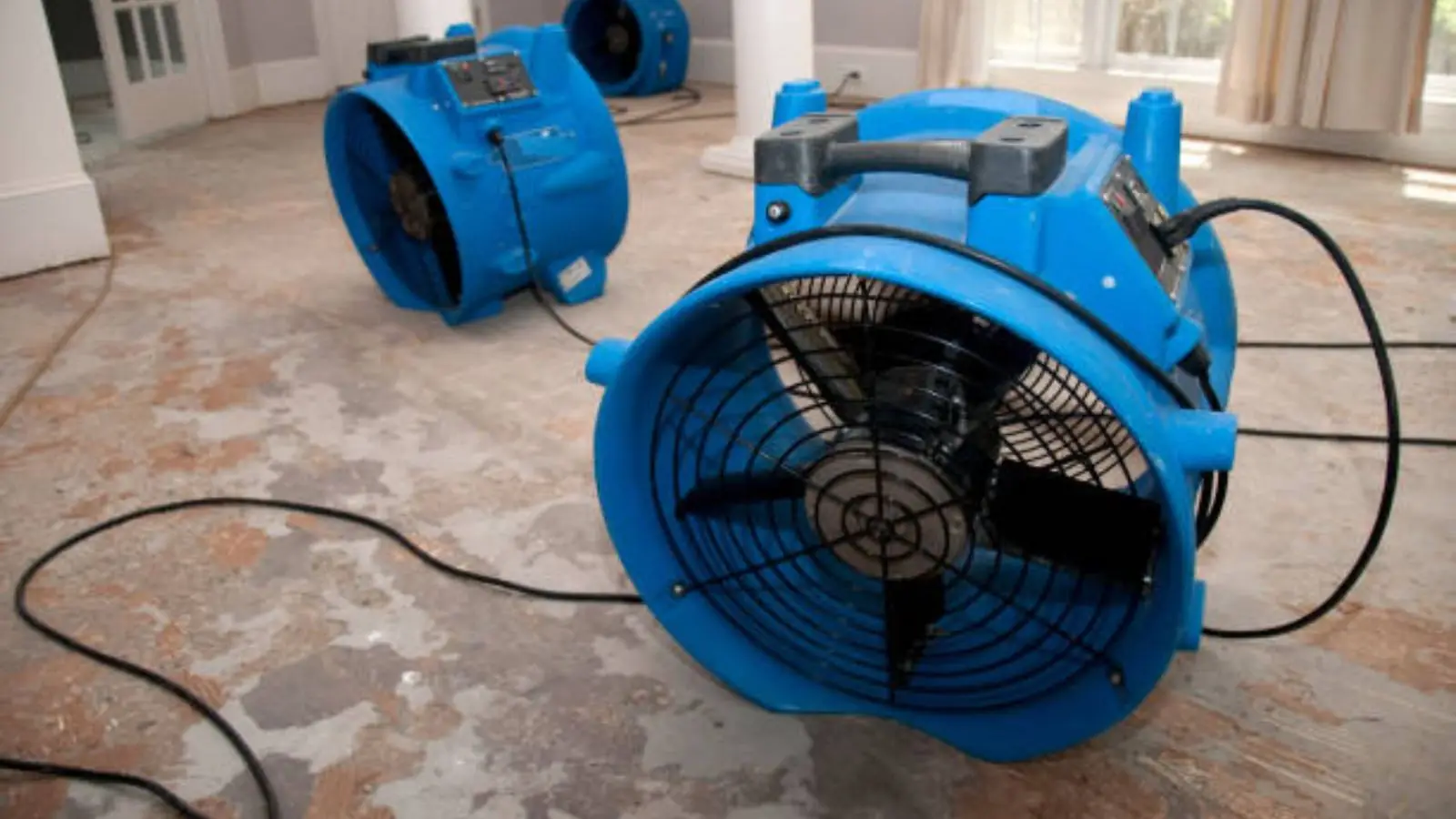
Drying is billed by the day because equipment is placed and monitored daily. A typical setup uses air movers to push dry air across surfaces and dehumidifiers to pull moisture from the air. The crew logs moisture readings each visit and removes equipment when readings reach the dry standard.
A job that takes four days costs more than one that takes three, and the main reason is the building, not the crew. Concrete slabs, thick walls, cool weather and closed-up rooms all slow drying. Ask the crew to show you the daily readings, because they are your proof that the equipment days were needed.
Mitigation and rebuild are two different jobs
Mitigation stops the damage: extraction, tear-out, drying and cleaning. Rebuild puts the home back: new drywall, texture, paint, baseboard, flooring and cabinets. Mixing the two on one lump-sum line makes quotes impossible to compare, and it can also complicate an insurance claim.
Our dispatch covers both stages. Mitigation work falls under water mitigation services, and the rebuild stage sits under repair and reconstruction. When you collect quotes, ask each company to price the two stages on separate lines so you are comparing like with like.
Why two quotes differ
Quotes diverge for a handful of reasons, and most of them are visible once you lay the scopes side by side. One company may include removal of baseboard and a flood cut, while another leaves it as an extra. One may plan five air movers, another eight. One may count only the flooded room, while another includes the wall cavities and the room next door.
- Different assumed water category, for example gray in one scope and clean in the other.
- Different drying equipment counts and a different number of expected days.
- Tear-out included in one scope and listed as an extra in the other.
- Contents handling, such as moving furniture or packing out, included or excluded.
- Rebuild priced as a lump sum in one quote and left out of the other entirely.
How to read a scope of work
A useful scope names the water category, lists each room with its affected materials, counts equipment, estimates drying days and says what gets removed. Look for moisture readings or a plan to take them. A scope that says only water damage cleanup with a single total gives you nothing to compare.
Treat anything not written down as not included. If the page does not say disposal, it may be billed later. If it does not say monitoring visits, ask who checks the readings and how often. For help with the cleaning stage, see how cleanup and sanitizing work is described on our service page.
Questions to ask before you approve work
A short list of questions will expose the difference between a tight scope and a vague one. Ask them of every company, in writing if you can.
- Do your crews work to ANSI/IICRC S500 for water and S520 for mold?
- What water category are you assuming and what would change it?
- How many air movers and dehumidifiers, and for how many days?
- Will you share the daily moisture readings and the final dry readings?
- Which materials are removed and which are dried in place?
- Are mitigation and rebuild on separate lines?
- What triggers a change order, and how will you tell me first?
Pricing questions for Montebello properties
Montebello has 20,308 housing units, and 55.6 percent are renter-occupied. If you rent, report water damage to your landlord in writing right away, since the building owner or property manager usually controls the repair decision and the claim. Keep your own photos of belongings, because renters insurance and the owner's policy cover different things, so check your policy.
A leak can start with a municipal supply issue or with your own pipe. Four water providers serve Montebello, according to the city, and the page does not say which serves which address. Look at your water bill before you call, since a utility problem and a plumbing problem are billed and repaired very differently.
Crews are dispatched across nearby cities as well. If you live east of the Rio Hondo, see our Pico Rivera service area, and for properties near Garvey Avenue and Rosemead Boulevard, read about Rosemead water damage help.
Common questions
Why can't a company give an exact price over the phone?
Cost depends on the water category, the wet area, the materials and the drying time, and none of those can be confirmed without seeing the space and taking readings. A phone range is only a starting point.
Does insurance pay for restoration?
Sudden and accidental water damage is often covered, gradual leaks and neglect often are not, and flood damage is usually excluded without separate flood coverage. Check your policy or ask your insurer.
Is it cheaper to wait and see if things dry on their own?
Waiting usually adds cost. EPA guidance says drying within 24 to 48 hours generally prevents mold growth, and mold means more removal and a separate remediation scope.
Who decides what repairs happen if I rent in Montebello?
Usually the owner or property manager decides on building repairs, so notify them in writing as soon as you find water. Your own policy, if you have one, is for your belongings.