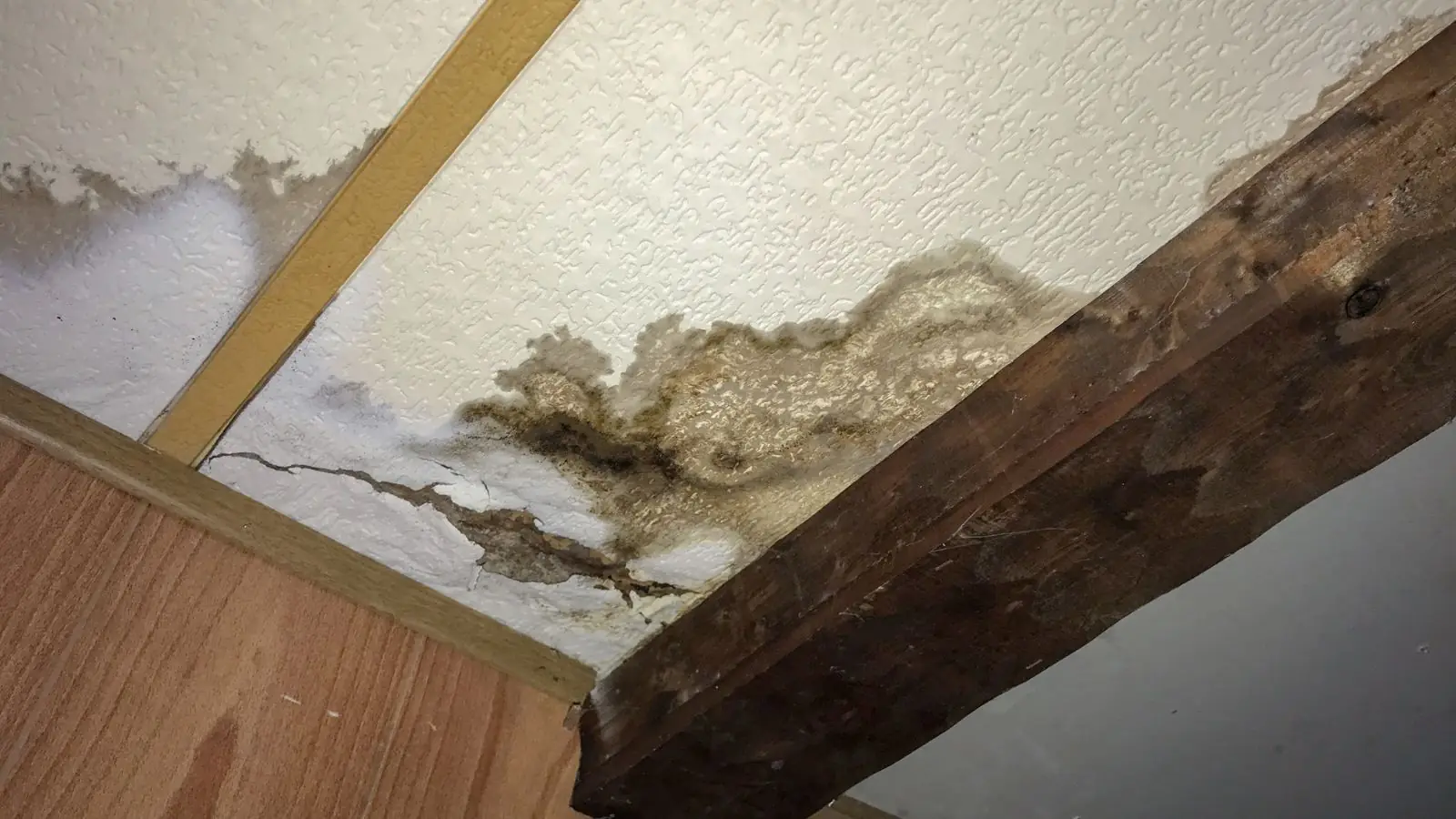
Wood is food for mold only when it is wet. Dry lumber in a sound attic can sit for decades without trouble, while a stud that stays damp behind a leaking tub can show growth in days.
The practical question is rarely whether mold is on the wood. It is whether the wood is still solid, how deep the staining goes and whether the moisture is gone. Those three answers decide if a crew cleans, sands or cuts it out.
Rule of thumb: surface growth versus a wood that has gone soft
Framing lumber, floor joists and plywood subfloor are structural, and mold on their surface is often treated by removing the growth from the wood. Trim, cabinet boxes, particleboard shelves and old furniture are different, since many are porous or made of pressed material that swells and holds moisture deep inside.
A simple test helps. Press a screwdriver tip into the wood. If it resists and the grain is firm, the damage is on the surface. If the tip sinks in or the wood crumbles, rot has started and the piece needs replacing, no matter how well it is cleaned.
Whatever the surface looks like, the cause has to be fixed first. Any plan that skips the leak, the roof, the pipe or the humidity problem is only a cosmetic change, and growth can return on damp wood.
Wood item by wood item
The table lists the wood you are most likely to find with mold, the condition that matters and the usual approach. A crew confirms each case on site with a moisture meter and a visual check.
| Wood item | Condition | Approach |
|---|---|---|
| Wall studs and joists | Surface staining, wood still firm | Containment, HEPA vacuum, sanding or wire brushing, HEPA vacuum again, then dry to target |
| Plywood or OSB subfloor | Surface growth on the underside, no delamination | Sand or abrasive-clean under containment. Replace sheets that are swollen or layered |
| Particleboard or MDF cabinet boxes | Swollen, soft or crumbling | Remove and discard, since the pressed fibers cannot be cleaned deep |
| Baseboard and window trim | Surface mold on painted wood | Remove, inspect the wall behind and replace in most cases |
| Solid wood furniture | Light surface growth, sound wood | Clean outdoors or off site with HEPA vacuum and detail work, and discard if the finish is soft |
Water or mold problem right now?
Call the 24/7 line and describe what you see.
What sanding with HEPA containment means
Sanding sounds like sawdust and mess, and without controls it would be. Under S520 practice, the work area is sealed with plastic sheeting, and negative air machines pull air through HEPA filters so dust moves toward the machine instead of into the rest of the house. The crew wears respirators and disposable suits, and the sanders or brushes connect to HEPA vacuums.
The abrasive step removes the stained surface layer of the wood, and then the area is vacuumed and wiped again. The result should be bare, clean wood with no visible growth. Discoloration can remain deep in the grain, and a crew will tell you if that is staining only.
Some crews use dry ice blasting or media blasting on rough framing, and both are also done under containment. Ask which method will be used and how dust is controlled.
- Negative air machine with HEPA filtration vented outdoors.
- Plastic barriers with a zippered door and a dry decontamination space.
- HEPA vacuums on the sanders, plus a final HEPA vacuum of the whole area.
- Moisture readings on the lumber before it is closed in again.
S520 in plain words
ANSI/IICRC S520 is the industry standard for mold remediation. In plain terms, it asks crews to find and fix the moisture, set up containment, remove or clean contaminated material, clean the air and surfaces and verify the result. It also separates remediation from testing. A company that tests should not be the same company that sells the cleanup, so independent testing, when it is used, gives you a neutral check.
You can ask any company whether its crews work to S520. Ask what they would do with your wood, not just what they would spray on it. Our mold remediation crews follow the sequence of containment, removal, cleaning and verification described above.
S520 also says nothing about health outcomes. If someone in your home has symptoms, that conversation belongs with a physician, not a contractor.
When the wood is replaced and what follows
Replacement is usual when wood is soft, split, delaminated or has been wet long enough to rot. A sistered stud or a new section of subfloor can restore strength where a joist is compromised, and a structural question should be answered by a contractor or engineer who can inspect the frame. If the wood is only stained and firm, cleaning is often enough.
After the wood is cleaned or replaced, the cavity should be dried to a normal reading before drywall, flooring or trim goes back. EPA guidance says drying wet materials within 24 to 48 hours generally prevents mold growth, which is why early water removal matters. If water caused the growth, water mitigation stops the damage, and the rebuild is handled as water damage repair once everything reads dry.
Wood, mold and moisture in Montebello homes
If your property has a crawl space, below-grade garage or utility room, the wood closest to the ground is the first to check. Look at the sill plate, the lower ends of studs and the floor joists with a flashlight, and press suspect spots with a screwdriver. Water from a leaking supply line or a plumbing drain can sit there unseen for a long time.
Montebello's water service comes from four providers listed on the city website, and the page does not say which one serves which address. If you suspect a leak in a wall or under the slab, the water bill is the quickest way to learn whom to call and to compare month-to-month use. A bill that jumps with no change in habits is a prompt to inspect.
Neighbors in Rosemead and Monterey Park face the same wood issues. For a moldy area larger than about 10 square feet, roughly 3 feet by 3 feet, EPA guidance points to professional help, so measure before deciding on a DIY approach.
Common questions
Can mold be sanded off framing for good?
Sanding can remove surface growth from solid framing, but it does nothing about moisture. If the leak or humidity remains, growth can return. Fix the source, dry the wood and have the area verified.
Does bleach kill mold on wood?
EPA does not recommend routine bleach use for mold cleanup. Wood is porous, and liquids soak into it rather than removing growth from the surface. Physical removal and moisture control do the real work.
Do I have to replace all the wood where mold appeared?
No. Firm, structural lumber with surface growth can often be cleaned. Soft, rotted, swollen or particleboard materials are usually removed and replaced.
What should I do first if I find mold on wood in my Montebello home?
Stop the water source, keep the area closed off and do not sand or scrub it dry. Take photos, measure the area and call for an assessment. Larger areas than about 10 square feet point toward professional help.