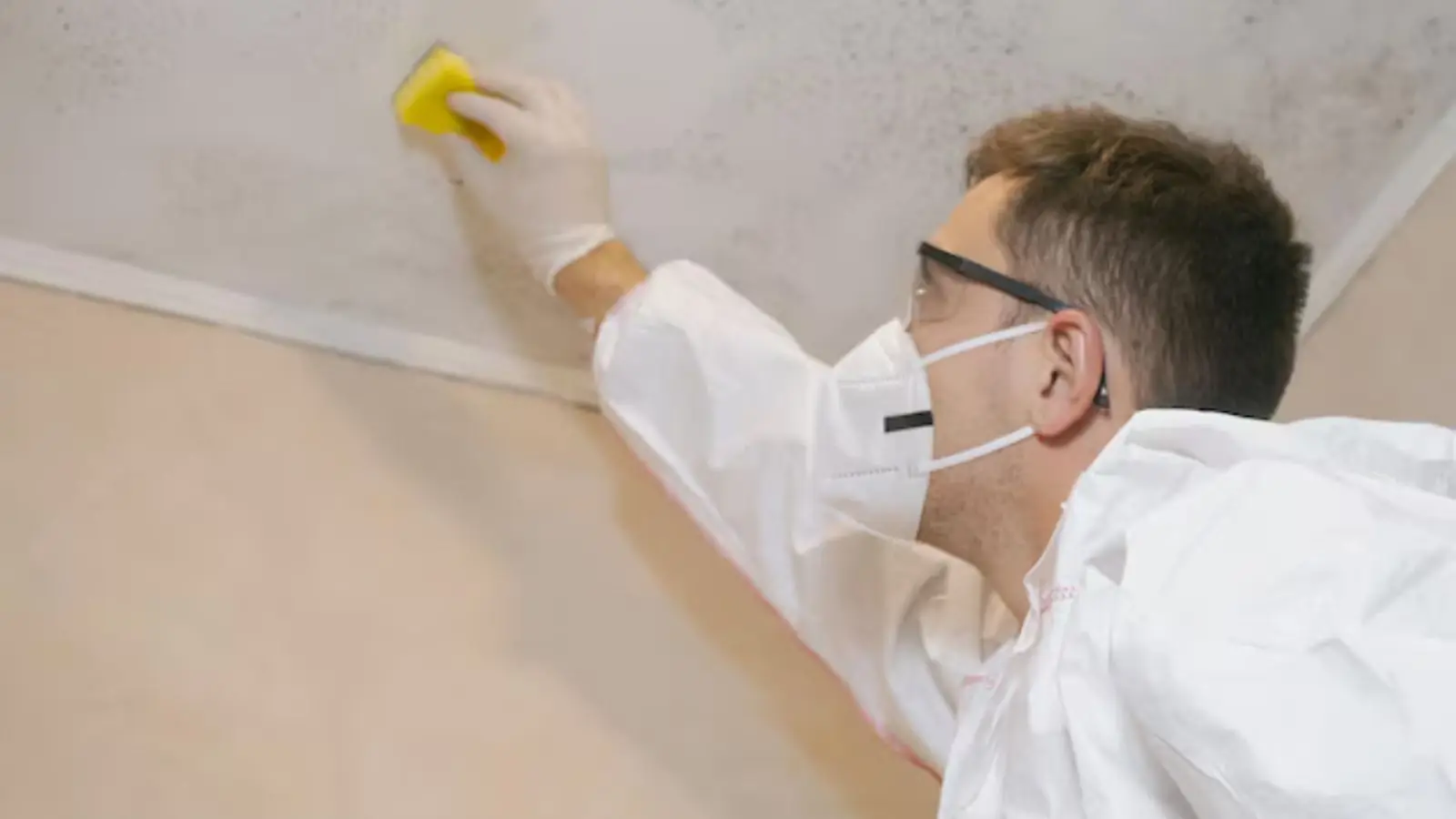
Decision rule first: if the moldy area is smaller than about 10 square feet, the water was clean and the material is hard and nonporous, many homeowners can handle it. If it is larger, if the water was dirty, or if it is in drywall, carpet or insulation, call a crew.
That rule comes from EPA guidance, which points to professional help for areas larger than roughly 3 feet by 3 feet. The rest of this guide shows the order of work for the rooms where people actually find mold: bathrooms, closets, kitchens and bedrooms.
The six steps, in order
Order matters more than product choice. Cleaning growth while a pipe still drips only gives you a clean spot that gets wet again. Follow the sequence below, and do not skip the first step.
Crews working to ANSI/IICRC S520 follow the same logic, with more equipment and tighter controls.
- Stop the moisture: shut off the leak, fix the vent fan, seal the window or clear the drain. Mold needs moisture.
- Isolate the area: close the door, tape plastic over vents and doorways and run a fan that blows outdoors from a window.
- Remove and clean: discard porous materials that are moldy, and scrub hard surfaces with detergent and water.
- HEPA vacuum: use a HEPA-rated vacuum on surfaces after they dry, never a household vacuum without that filter.
- Dry completely: use a dehumidifier and air movement until materials read dry. EPA guidance says drying within 24 to 48 hours generally prevents mold growth.
- Verify: check moisture readings, look for remaining staining and watch the area for several weeks.
Room by room: moisture source and approach
Each room has its own habits. A bathroom grows mold from steam and splashes, a closet from trapped air against a cold wall, a kitchen from slow drips and a bedroom from condensation or a leak above. Fix the source named in the table, then use the approach beside it.
| Room | Common moisture source | Approach |
|---|---|---|
| Bathroom | Steam, worn caulk, a weak vent fan or a leaking shower pan | Replace caulk, scrub tile and grout, run the fan for 20 minutes after a shower and cut out soft drywall |
| Closet | Shared wall with a bathroom, a roof leak or poor airflow | Empty it, check the wall with a meter, remove wet drywall and leave louvered doors open |
| Kitchen | Dishwasher hose, sink supply line or a refrigerator ice-maker line | Fix the leak, pull wet cabinet bases and subfloor material, then dry and replace |
| Bedroom | Window condensation, a ceiling leak or an AC line overflow | Dry the wall, replace moldy carpet pad and drywall and keep indoor air moving |
| Laundry area | Washer hose, dryer vent leak or overflowing drain pan | Replace hoses, vent the dryer outside and dry the floor and wall base |
Water or mold problem right now?
Call the 24/7 line and describe what you see.
DIY or professional: size and water category
Two things decide this: how much area is affected and what kind of water caused it. Under S500, category 1 water is clean, as from a supply line. Category 2 is gray water with some contamination, such as a dishwasher or washing machine discharge. Category 3 is black water, including sewage and flooding from outside, and it is never a DIY job.
A small patch of mold on bathroom grout from steam is the classic DIY case. Growth on a bedroom wall after a roof leak is not, since drywall absorbs water and growth often runs behind the paint. Carpet, ceiling tile and insulation are porous, so if they are moldy, they are usually discarded.
If you do clean something yourself, wear an N95 or better respirator, gloves and eye protection, and bag the debris before moving it through the house. If you are unsure, an assessment is a smaller step than guessing wrong.
Why a crew sets up containment
Scrubbing or cutting moldy drywall puts spores into the air, and they settle in other rooms. A crew builds a sealed work zone with plastic sheeting, runs negative air with HEPA filtration and removes debris in sealed bags. The goal is to leave the rest of the home as clean as it was.
After removal, surfaces are cleaned and HEPA vacuumed, and materials are dried and checked. Our mold remediation work follows that order of steps, and testing, if you want it, is separate from the cleanup.
If the growth followed a leak that also soaked flooring or walls, water mitigation handles the drying and the rebuild follows after clearance.
What not to do
Do not paint over mold, since paint sits on top and the moisture underneath keeps working. Do not aim a fan at a moldy surface, because it moves spores into other rooms. EPA does not recommend routine bleach use for mold cleanup, and mixing bleach with ammonia products creates a hazardous gas.
Do not put a dehumidifier in one room and close the door on the rest of the home if the source is still active. Fix the source, then dry. Also avoid cutting into a wall when there is any chance of wiring or a live pipe behind it.
Mold and moisture in Montebello living spaces
The 2020 Census counts 20,308 housing units in Montebello, with 55.6 percent renter-occupied. In a rental, a moldy bathroom or closet should be reported in writing to the landlord or property manager, with dated photos, because repairs to the unit's plumbing or roof are often theirs to arrange. Owners should keep invoices from any leak repair.
If you suspect a hidden supply leak behind a closet or kitchen wall, start with the water bill. The City of Montebello lists four water providers, and the page does not say which serves which address, so the bill tells you who to call and lets you compare use over several months.
Next door, homes in Pico Rivera and Rosemead share the same bathroom and closet problems. Ask your city building department about permits if a repair involves removing a large section of wall or changing plumbing.
Common questions
Can I clean mold on bathroom grout myself?
Often yes, when it is a small area on tile or grout. Scrub with detergent and water, wear a respirator, gloves and eye protection, ventilate and fix the vent fan or caulk that let moisture build up.
Should I use bleach on mold in my house?
EPA does not recommend routine bleach use for mold cleanup. Physical cleaning of hard surfaces and removal of porous material, along with moisture control, is the approach standards follow.
How big is too big for a DIY mold cleanup?
EPA guidance points to professional help once the moldy area is larger than about 10 square feet, roughly 3 feet by 3 feet. Water category and material type matter too, so black water or moldy drywall also calls for a crew.
Who handles a mold problem in my Montebello apartment?
Report it to the landlord or property manager in writing with dated photos. If the cause is a leak in the building, repair is usually theirs to arrange. Check your lease and your renter's policy for what you may be responsible for.