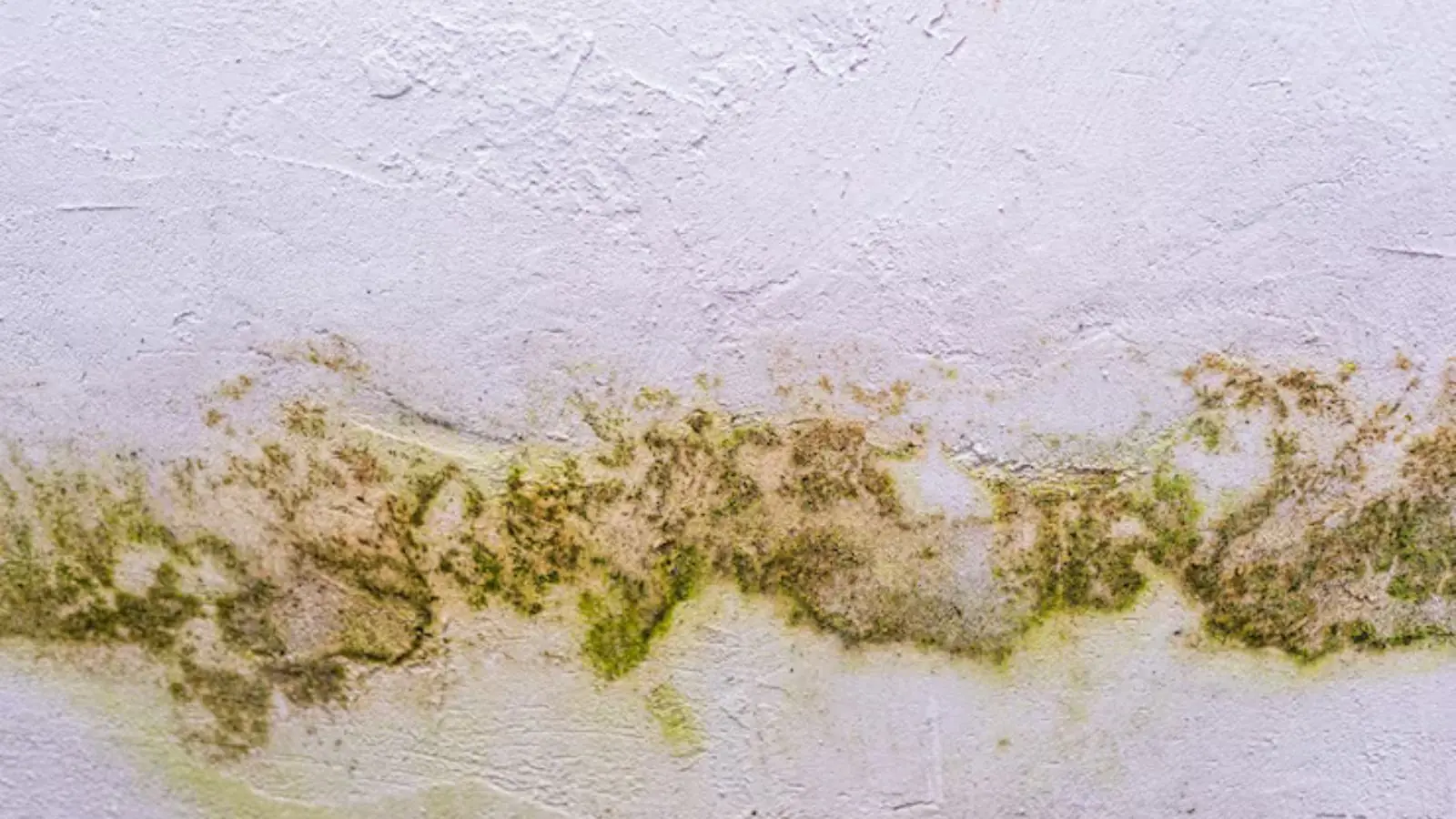
Most of the time you do not need to know which one it is. Growth on a wall or ceiling means there was moisture, and the first job is to find it, dry it and deal with the material. That rule holds whether the stain is black, green, white or orange.
Still, people want a name for what they see, and the internet offers a simple one: black means dangerous, white means harmless. That is not how it works. This guide explains what looks and texture can honestly tell you, where testing helps, and when the difference does not change the plan.
Color does not identify the species
Mold colonies change color with age, food source, moisture and light. A species that looks green on drywall can look dark on grout, and several unrelated species look black. So a black stain is not proof of any particular type, and a pale one is not proof of a mild one.
The phrase black mold is a popular label rather than a precise one. Naming a species takes a lab, and even then the lab report does not settle the question of what to do about a wet wall. Any health question about exposure belongs with a physician, not with a color chart.
Mildew versus mold in plain terms
Mildew is a casual word for surface growth that sits flat on a material, often powdery or downy, commonly white, gray or pale yellow. You see it in showers, on window sills and on damp fabric. Mold is the broader word, and growth that looks fuzzy, raised or spotty, or that has darkened, gets called mold.
In practice both are fungi that need moisture, and the difference that matters is how deep the growth goes. A film on a tile or sealed surface can be cleaned. Growth that has penetrated drywall paper, wood fibers or carpet padding has to be removed. The table below sums up how the two usually compare, with the caution that appearance overlaps.
| Feature | Mildew (common usage) | Mold (common usage) |
|---|---|---|
| Typical look | Flat, powdery or downy, often white or gray | Fuzzy, raised or spotty, from green to dark gray or black |
| Typical location | Shower walls, window sills, damp fabric, sealed surfaces | Drywall, ceiling tiles, wood framing, insulation, carpet padding |
| Depth | Usually stays on the surface | May be on the surface or grown into porous material |
| Usual approach | Clean the surface, dry it, fix the humidity | Assess size and material, then clean or remove, dry, fix the source |
| Can looks confirm it? | No, appearance overlaps | No, only lab sampling identifies a type |
Water or mold problem right now?
Call the 24/7 line and describe what you see.
Surface growth versus embedded growth
This is the distinction that drives the work. Surface growth sits on a nonporous or sealed material like glass, tile, sealed concrete or metal. A damp wipe and a HEPA vacuum can remove it, and drying prevents a repeat while the moisture is gone.
Embedded growth has threads running into the material. Drywall paper, ceiling tile, insulation, carpet and soft wood all hold it. Wiping the face leaves the roots in place, so removal under containment by a mold remediation crew is the usual approach, with plastic sheeting and a HEPA air scrubber to keep spores out of clean rooms. ANSI/IICRC S520 governs mold remediation, and you can ask any company whether its crews work to it.
- Press a screwdriver tip into the material. If it is soft, crumbly or stained through, treat it as embedded.
- Look at the back side of removable panels and the underside of carpet padding.
- Check how large the area is. EPA guidance points to professional help above about 10 square feet, roughly 3 feet by 3 feet.
- Check for a smell without a visible source, which can mean growth behind a surface.
- Find the water: a leak, condensation, a roof stain or a bathroom fan that does not vent.
What testing can and cannot do
Air and surface samples can show that spores are present and which types are in the sample taken that day. They cannot tell you how a particular person will react, and results vary with the time of day, the weather and whether a door was open. A sample is a snapshot, not a verdict.
Testing is most useful when the source is unclear, when a hidden problem is suspected, or after remediation to compare an area to a clean outdoor or unaffected reference. A visible, wet-linked growth does not need a test to justify cleanup. Be cautious of anyone selling a test to decide whether the problem is real when the stain is in front of you.
When the difference changes nothing
If the growth sits on drywall that got wet, the plan is the same for any color: stop the water, dry the area, and remove material that cannot be cleaned, which is where water mitigation drying comes in. If it is a thin film on a sealed tile, the plan is also the same: clean it and fix the humidity. In both cases the name on the label changes the conversation less than the moisture reading does.
The difference starts to matter when the size is large, the material is hidden, or someone in the home has a medical concern. Then a physician and a qualified assessor are the right voices. No honest provider promises that mold will not come back, because it depends on the moisture that remains.
Safety first
If the damp area also has standing water near outlets, sewage, or a sagging ceiling, stay clear. Cut power only if the panel is dry and reachable, and call the utility or 911 for electrical or gas hazards. Wet drywall can also collapse, so do not pull on a ceiling that looks swollen.
Montebello moisture sources worth checking first
Montebello is about 8 miles east of downtown Los Angeles, and the Rio Hondo runs along its east side toward Pico Rivera. If the growth showed up after heavy runoff or a plumbing event, a drying crew will want to know the source. The nearby pages for Monterey Park and Pico Rivera describe how neighbors on either side handle the same moisture questions.
The City of Montebello website lists four water providers, and it does not say which serves which address. Look at your bill and call that provider if you suspect a leak on the supply side. Renters, who make up 55.6 percent of the 20,308 housing units counted in the 2020 Census, should photograph the growth and notify the landlord in writing before anyone cuts into a wall.
Common questions
Is black mold always more dangerous than other colors?
Color does not identify a species, so you cannot rank risk by it. Any health concern belongs with a physician. For the home, the plan is driven by moisture, material and size.
Can I clean mildew myself?
Small surface growth on sealed materials can often be cleaned with detergent and water, then dried. EPA does not recommend routine bleach use for mold cleanup. If it returns or the area is larger than about 10 square feet, call a professional.
Should I test before I remediate?
Not when growth is visible and tied to water damage. Testing helps when the source is hidden or when you want a comparison after the work. Remediation follows S520.
What is the first step if I find dark growth in my Montebello home?
Find and stop the moisture, keep the area dry, and photograph it. Then call the 24/7 dispatch line so a crew can assess the material and size and help build a plan.