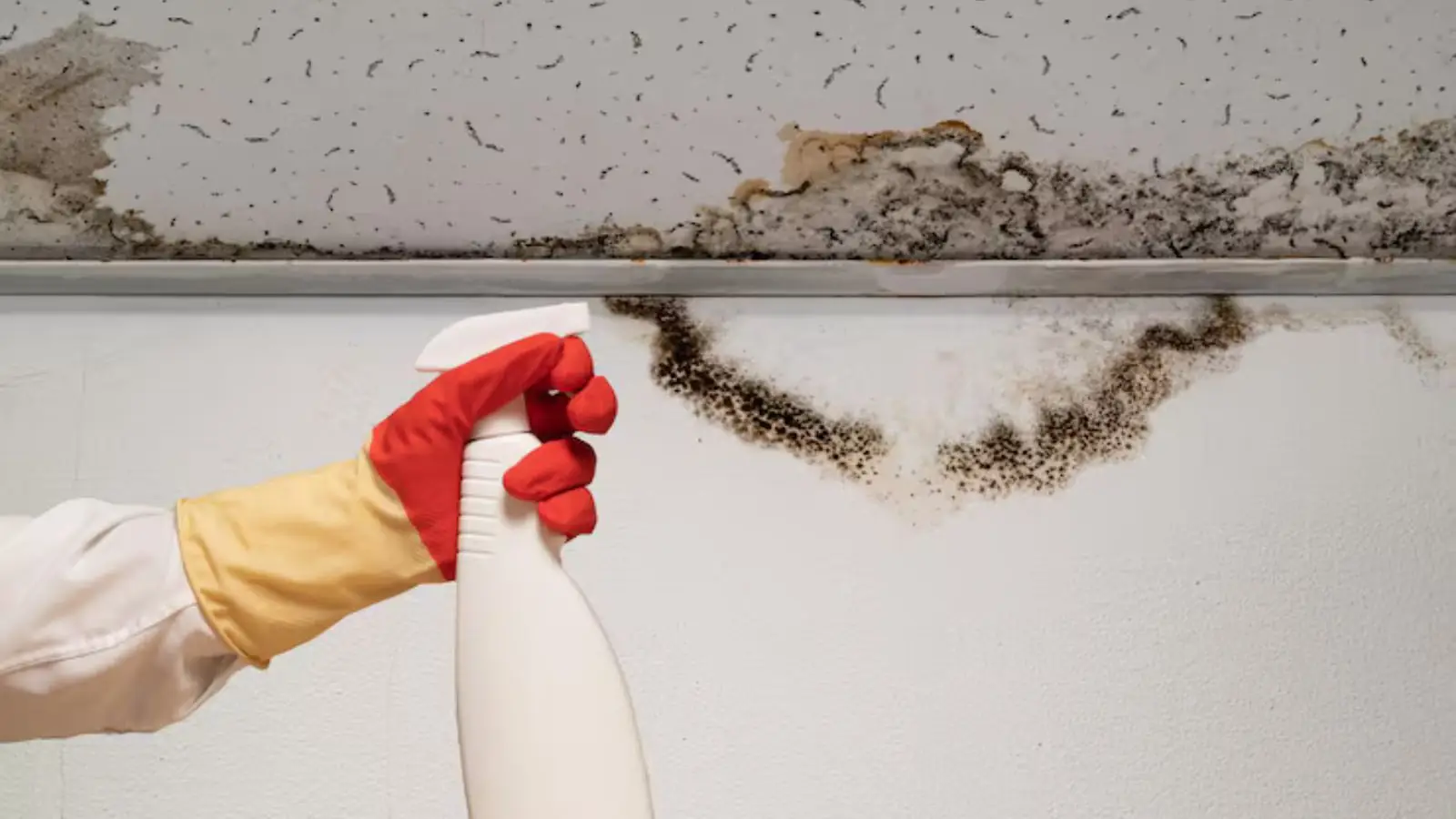
A gray, brown or black patch on the ceiling is easy to spot and easy to misread. It might be a thin film of surface growth from a steamy bathroom, or it might be the visible edge of a wet ceiling cavity that has been leaking for weeks. The color alone cannot tell you which.
What the patch does tell you is that moisture is reaching the ceiling, because mold needs moisture. This guide covers the usual sources, why paint does not solve it, when a ceiling is a stay-clear emergency, and what a remediation crew actually does.
Stay clear first: when a ceiling is an emergency
A ceiling that sags, bulges or drips is holding water, and wet drywall is heavy. A bubble the size of a dinner plate can hold liters and may fall without warning. Do not poke it, do not stand under it, and keep children and pets out of the room.
If water is near a light fixture, ceiling fan or outlet, treat it as an electrical hazard. Cut power at the panel only if the panel is dry and you can reach it without crossing wet floor. If you cannot, or if you smell gas or see sparks, leave and call the utility or 911. After that, call for dispatch, since an emergency crew can relieve the water safely and open the ceiling in a controlled way.
Where the moisture is coming from
Ceiling growth almost always traces back to one of four sources. A roof leak lets rain in around flashing, vents or damaged shingles, and the stain often shows up several feet from the entry point because water runs along rafters. A bathroom fan that vents into the attic instead of outdoors dumps steam above the ceiling day after day.
Upstairs plumbing, such as a drain, supply line or tub overflow, wets the ceiling below it. HVAC condensation drips from a clogged drain pan or sweats on uninsulated ducts in the attic. Tracing the source is the first job, since the right fix depends on it.
A ring-shaped stain that grows after rain points up to the roof. A patch that stays near the bathroom points to the fan. A stain under an upstairs bathroom or kitchen points to plumbing, and a damp spot on hot days when the air conditioner runs points to condensation.
Water or mold problem right now?
Call the 24/7 line and describe what you see.
Reading the ceiling: sign, cause and next step
The table matches what you see with the most likely cause and a sensible next move. It is a starting point, not a diagnosis, and a crew with a moisture meter will confirm it.
| Ceiling sign | Likely cause | Next step |
|---|---|---|
| Dark speckled film in a bathroom corner, dry to the touch | Steam with a weak or ducted-to-attic fan | Fix the fan and its vent, then have the growth assessed and cleaned |
| Brown ring stain that grows after rain | Roof leak or failed flashing | Tarp or patch the roof, then dry the cavity and assess for growth |
| Bubbling, soft or sagging paint and drywall | Active leak or trapped water above | Stay clear, shut water off if plumbing, call now for controlled opening |
| Damp spot under an upstairs bathroom or kitchen | Supply line, drain or tub leak | Shut off water, call a plumber and a restoration crew to dry the cavity |
| Dark spots along a duct or vent grille | HVAC condensation | Have a technician clear the drain pan and insulate ducts, then clean the area |
Why painting over mold fails
Paint hides color but does not remove growth or the moisture feeding it. Growth sits in the paper face of the drywall and keeps spreading under the film, and within weeks it usually shows through again. Some paints advertise mold resistance, but they apply to dry surfaces, not to a ceiling that is still wet.
EPA does not recommend routine bleach use for mold cleanup either. Bleach can bleach the color out of the stain and leave the growth underneath, and it adds water to a porous surface. A cleaned ceiling that is still damp will grow again, so the sequence has to be fix the moisture, remove the affected material, dry, then rebuild.
What the crew does
Remediation work follows ANSI/IICRC S520, the industry standard for mold remediation. A crew starts by finding and measuring the moisture with a meter, then isolates the room with plastic sheeting and negative air so spores are not pulled into the rest of the home. Workers wear respirators and protective suits while they work.
Affected drywall and insulation are cut out and bagged, and surrounding framing is cleaned with HEPA vacuums and wiped. The cavity is dried with air movers and dehumidifiers until readings come back normal. You can read about the full process on our mold remediation service page, and wet ceiling cavities are handled under water mitigation work.
- Moisture mapping with a meter to find the true extent of the wet area.
- Containment with plastic barriers and a negative air machine.
- Removal and bagging of affected drywall, insulation and paper-faced material.
- HEPA vacuuming and wiping of framing, then drying to a dry standard.
- Clearance check before any new drywall goes up.
Testing, health questions and rebuilding
Testing is a separate decision and sampling follows S520 protocols when it is used. A sample can show what type of growth is present, but it cannot replace fixing the moisture source and removing wet material. Questions about how mold affects your health belong with a physician, not with a restoration crew.
No one can promise that mold will never return, since that depends on whether the building stays dry. What a crew can do is remove the affected material and dry the structure. After clearance, new drywall, texture and paint are a separate project, and our post-dry-out repair work covers that stage.
Ceiling moisture in Montebello homes and rentals
Montebello has 20,308 housing units, and 55.6 percent are renter-occupied. If a ceiling in a rental has dark growth, tell the landlord or property manager in writing and attach photos with a date. They control the roof, the shared plumbing and the HVAC, so the repair decision usually starts there.
Montebello sits about 8 miles east of downtown Los Angeles. If you live in a multi-unit building, whether off Whittier Boulevard, San Gabriel Boulevard or a side street, a stain can come from the unit above, so ask the neighbor upstairs before you assume the roof. If you are unsure who maintains a supply line, look at your water bill, since the city lists four water providers and does not say which one serves each address.
If you are near the borders, our crews also cover surrounding cities. See the page for Rosemead ceiling and leak repair or the one for Monterey Park restoration services.
Common questions
Is every dark spot on a ceiling mold?
No. Dust, soot, smoke and water stains can look similar. A moisture meter and an inspection can tell whether the area is wet and whether remediation is needed.
Can I clean ceiling mold myself with bleach?
EPA does not recommend routine bleach use for mold cleanup. For an area larger than about 10 square feet, roughly 3 feet by 3 feet, EPA guidance points to professional help.
Do I have to replace the drywall?
Often yes. Porous drywall and insulation that grew mold are usually removed, because they cannot be cleaned reliably. Framing can often be cleaned and dried.
Will insurance cover ceiling mold?
Mold that follows sudden and accidental water damage may be covered, while gradual leaks and neglect often are not. Check your policy or ask your insurer.
Who should I call about a stained ceiling in Montebello?
If it sags or drips, call a 24/7 dispatch line right away and stay out from under it. For a dry stain, find the moisture source first, then ask for an inspection.